Hidden Intelligence, Effortless Luxury
Step into a world where innovation disappears and refinement takes center stage. Today we explore concealed smart home upgrades for a seamless high-end aesthetic, showcasing solutions that elevate comfort, security, and atmosphere while keeping technology discreetly tucked away. Expect practical planning advice, design-forward ideas, and stories that prove elegance and performance can coexist without visual clutter.
Planning the Invisible Layer
Coordinate with architects early to align stud spacing, blocking, and conduit runs for hidden shades, plaster-over speakers, and trimless fixtures. Mark service panels where art or cabinetry can discreetly conceal them. This collaboration avoids last-minute compromises, keeps equipment inaudible, and ensures that every hidden element remains both accessible and invisible for routine maintenance, firmware updates, and eventual technology refreshes that won’t disturb pristine finishes.
Prioritize living spaces with the highest visual scrutiny: great rooms, primary suites, kitchens, and entrance halls. Identify where automation delivers the greatest comfort with the least visual footprint, such as pocketed shades, invisible audio, and centralized controls. In secondary spaces, specify simpler concealed solutions that still align with the overall finish palette. Comment with your most challenging room, and we’ll suggest tailored strategies that preserve elegance while maximizing performance.
Adopt oversized conduits, pull-strings, and strategically placed junction boxes to support evolving standards and media formats. Place extra network drops in ceilings for future wireless access points, but leave the surfaces unmarred. Design cabinetry with hidden ventilation baffles and removable panels for silent racks. These small provisions mean upgrades later will feel effortless, avoiding patched walls, surface-mounted gadgets, and disruptive downtime that breaks the spell of a calm, coherent interior.
Lighting That Disappears, Atmosphere That Shines
When light feels natural, fixtures can vanish. Trimless profiles, micro‑aperture downlights, and hidden linear grazers facilitate sculpted spaces without visible clutter. Pair layered scenes with circadian rhythms, low-glare optics, and quiet drivers to keep attention on materials and art. Guests notice the mood, not the hardware. Ask about our favorite pairings for stone, wood, and plaster finishes, and get scene presets that evolve from morning clarity to evening warmth automatically.

Trimless Lines and Hidden Drivers
Recess linear channels within plaster reveals and keep drivers in ventilated remote cabinets for silence and serviceability. Micro-flanged apertures disappear into ceilings while still delivering powerful, even illumination. Use low-dimming curves for buttery fades that feel cinematic rather than mechanical. Calibrate brightness differently by surface reflectance, ensuring marble gleams, oak remains rich, and artwork glows without hotspots or distracting scallops that betray the technology quietly working behind the scenes.

Daylight Harmony
Marry motorized shading and color-tunable lighting so interiors follow daylight cues. Reduce blue content in the evening while pocketed shades lower quietly to cut glare across glossy finishes. Sensors measure ambient lux and adapt output invisibly. This approach enhances wellbeing, reduces fatigue, and preserves a gallery-like calm. Share your exposure challenges—corner windows, skylights, mirror-finished kitchens—and we’ll suggest layered strategies that manage sunlight without bulky valances or visible mechanical distractions.
Plaster-Over Loudspeakers
Use panel-based transducers installed flush with substrate, finished with approved skim coats that match surrounding surfaces. Detail joints to prevent hairline cracks and decouple vibration from trim. After installation, apply equalization profiles tuned to dispersion characteristics unique to invisible diaphragms. Listeners perceive a broad, airy soundstage while walls read as uninterrupted planes. Regularly scheduled checkups ensure longevity, preserving both acoustic performance and the immaculate finish that defines truly elevated residential spaces.
Bass Without Boxes
Conceal subwoofers in toe-kicks, staircase voids, or millwork cavities with acoustically transparent facades. Incorporate rigid bracing and isolation pads to prevent sympathetic rattles. Employ multiple small units rather than a single large one to smooth response across seats. Calibration aligns phase and crossover points, avoiding localization. The bass becomes felt rather than seen, anchoring music and cinema with authority while cabinetry remains visually uninterrupted and proportionally perfect from every angle in the room.
Tuning for Transparency
Room correction refines clarity without adding visible acoustic treatments. Measure at multiple listening positions, then apply gentle filters that preserve dynamics. Pair digital tuning with subtle, integrated elements—fabric-wrapped panels behind art or micro-perforated ceilings—to temper reflections discreetly. The system disappears as instruments lock in focus. Share your room dimensions in the comments, and we’ll recommend target curves that complement your finishes and furniture layouts without compromising that disciplined, gallery-grade presentation.
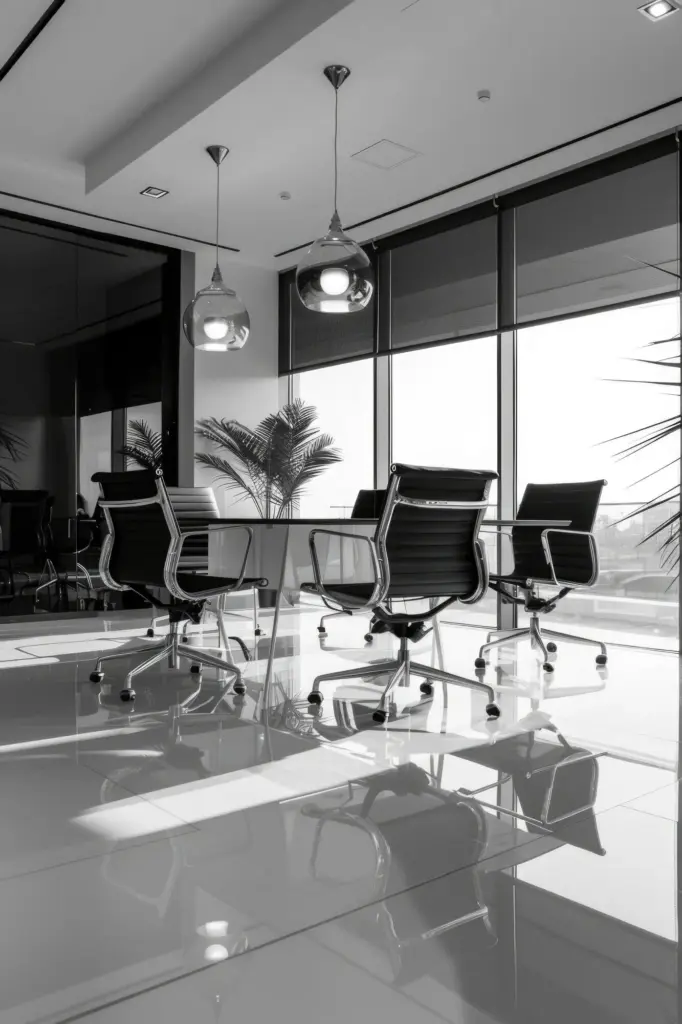
Pocketed Perfection
Coordinate ceiling pockets during framing to accommodate shade tubes, hem bars, and access panels while preserving insulation, airtightness, and fire ratings. Align pockets with trimless lighting for crisp, continuous lines. Specify side channels only when absolutely necessary, selecting finishes that blend seamlessly with jambs. Careful commissioning sets limits, speed profiles, and favorite positions so daylight modulation feels intentional, measured, and elegantly restrained instead of mechanical or attention-seeking in serene, contemplative rooms.

Dynamic Privacy
Electrochromic or polymer-dispersed liquid crystal glass transitions from clear to private without blinds or curtains. Integrate with presence, time-of-day, or meeting schedules in hybrid live-work spaces. Edge seals and busbars hide within mullion details to keep sightlines pure. This technology reduces cleaning, preserves design intent, and complements minimalist schemes. Post your facade orientation and we’ll propose a hybrid approach that balances transparency, thermal comfort, and nighttime reflections with remarkable subtlety.
Networks, Power, and Control Behind the Scenes
Understated experiences rely on robust infrastructure. Enterprise-grade Wi‑Fi, PoE lighting, silent racks, and clean low-voltage pathways keep signals strong while surfaces stay pristine. Uninterruptible power protects scenes and schedules during outages, and centralized processors streamline integrations without wall clutter. We’ll share real-world rack layouts, cable labels that read beautifully, and maintenance rituals that preserve reliability. Comment if you’d like a printable commissioning checklist to hand your builder or interior designer.
Security and Sustainability Without the Gadget Look
Protection and efficiency can be highly sophisticated without advertising themselves. Micro-sensors, recessed contacts, discreet cameras, water shutoff valves, and energy dashboards keep your household safe and responsible while finishes remain untouched. Privacy-forward design respects personal data and guest comfort. We’ll outline strategies that blend guardianship and grace, then invite you to share concerns so we can tailor solutions that feel humane, quiet, and fully aligned with an elegant residential setting.


All Rights Reserved.